

Seattle expands affordable electric vehicle charging network – Apply today for a new curbside EV charger near your home or apartment
Partnership with Seattle City Light will provide up to 200 new curbside charging stations by 2030, ensuring greater access to reliable, climate-friendly travel options, with funding from the voter-approved Seattle Transportation Levy
Blog stats: 1,000 words | 5-minute read
At-a-glance:
- The City of Seattle is installing up to 200 new electric vehicle (EV) curbside Level 2 charging stations by 2030.
- The purpose is to expand access to an affordable, environmentally friendly transportation option with more reliable charging near people’s homes and apartments.
- Electric vehicles help reduce air-polluting emissions, minimize traffic noise, and create neighborhoods that are more resilient to the effects of climate change.
- Level 2 charging provides 12-30 miles of range per hour and is the most widely adopted in the U.S. Check out Seattle City Light’s EV Charging 101 to learn about different types of EV charging equipment.
- Learn more and apply today. Applications will remain open through fall 2027.
As electric vehicle prices continue to fall and gas prices rise, more people in Seattle are purchasing EVs as a trusted option for their everyday travel needs. Today, around 1 in 4 newly registered vehicles in the greater Seattle area are EVs. However, many people who live in apartments or rely on street parking don’t have consistent access to charging at home.
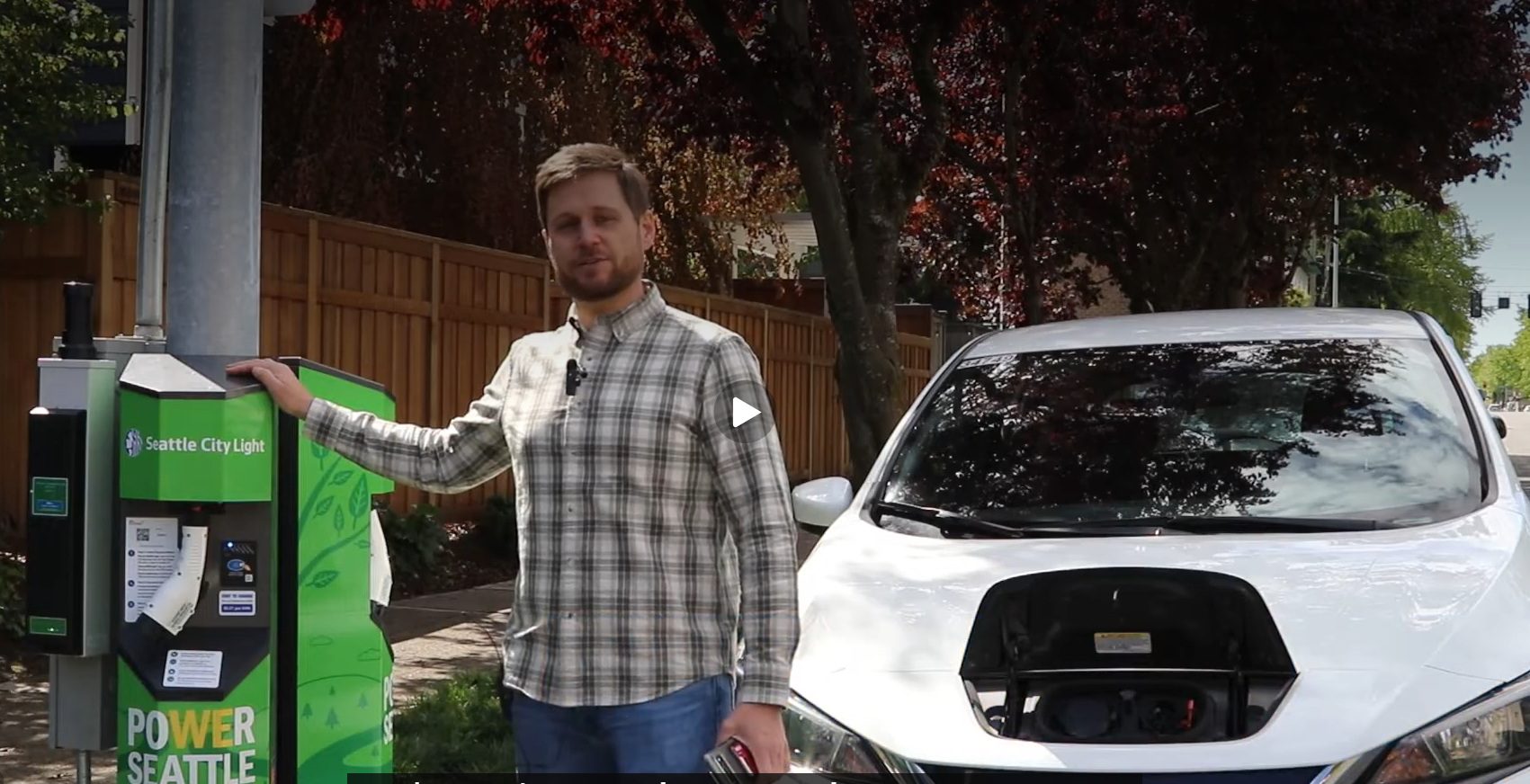
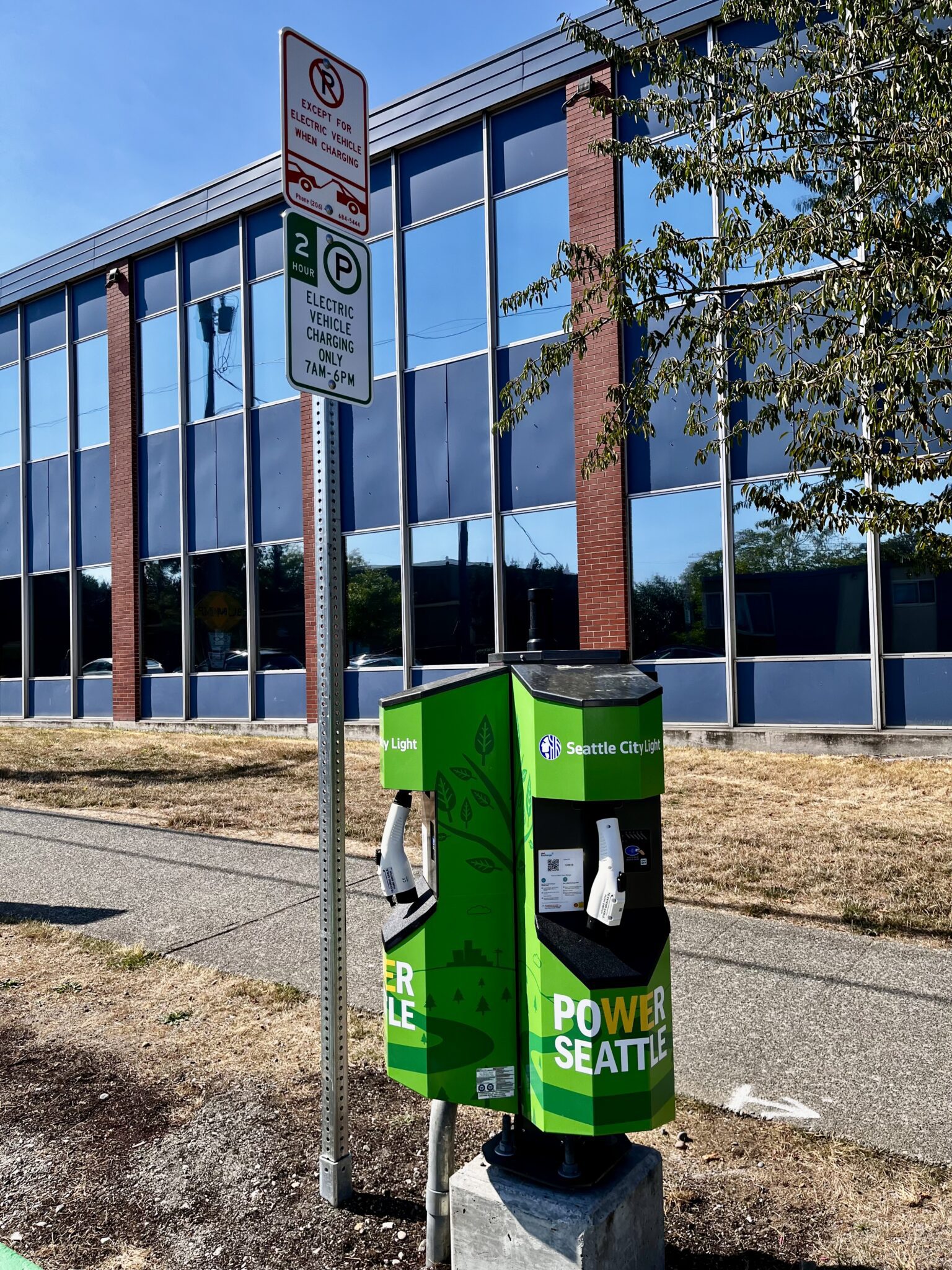
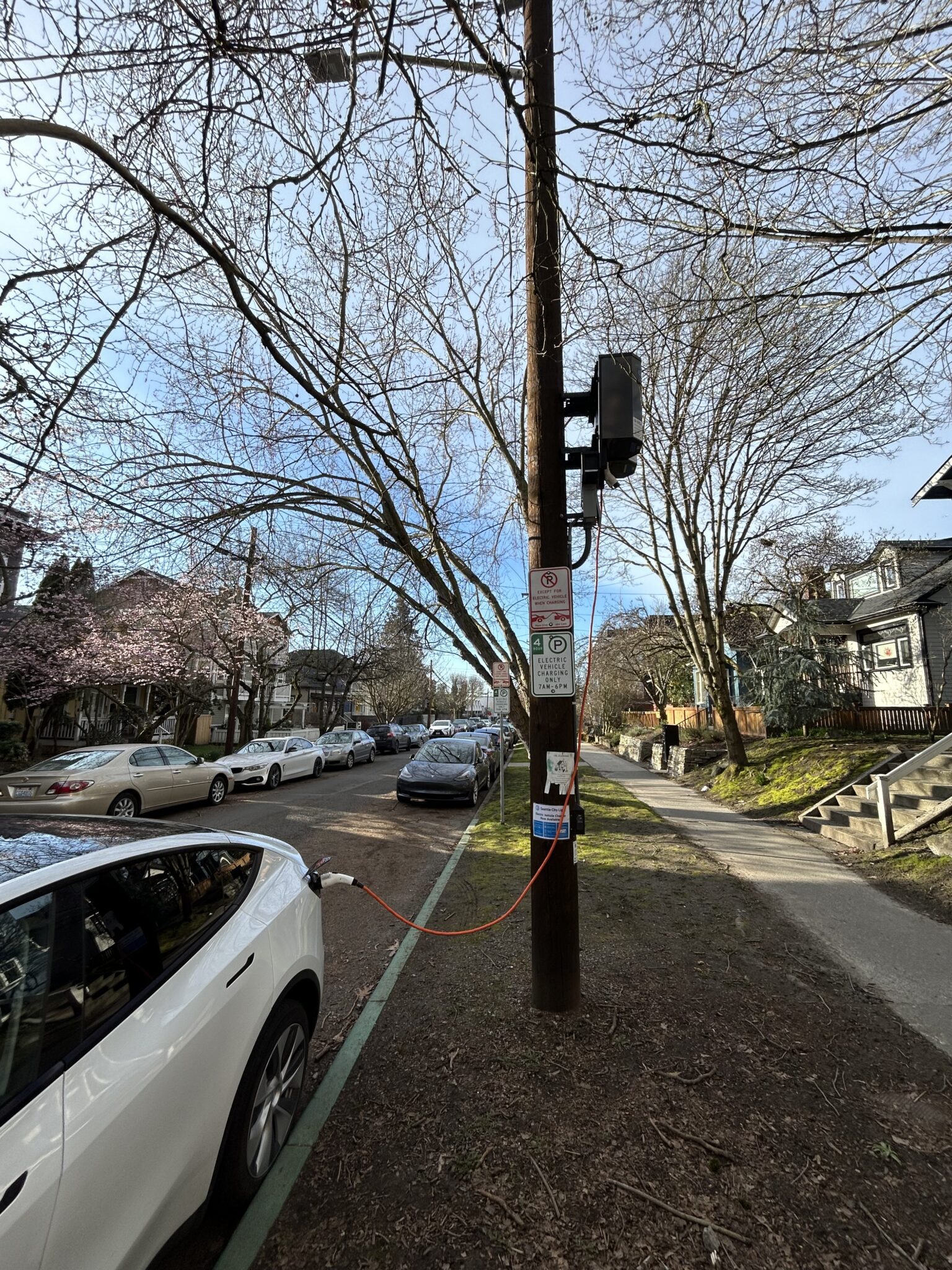
That’s why Seattle City Light and the Seattle Department of Transportation (SDOT) are expanding our public charging network with hundreds of new curbside EV charging stations coming online by 2030 to help you and your neighbors safely, reliably, and conveniently charge your EV near your home. This work will complement other Levy-funded EV charging investments planned at parks, community centers, and libraries, ensuring charging is accessible throughout the city.
Access to public EV charging provides a valuable community resource and supports cleaner, more vibrant neighborhoods by reducing air and noise pollution. They’re one important tool in a broader suite of travel options which include taking transit, walking, biking, scooting, rolling, carpooling/vanpooling, and driving.

In 2023 and 2024, City Light and SDOT completed a pilot program to install curbside EV chargers at 31 locations across Seattle to see if there would be high demand for curbside charging. These chargers were successful, drawing high usage numbers and positive feedback from the community. You can view an online map of existing charger locations.
“As a homeowner without a home charging solution (no driveway/garage available, street parking only) in a densely populated area, the more street chargers the better in my opinion! It increases convenience for folks like me and increased the viability of switching to an EV for my neighbors.” – Curbside Charger User Survey Respondent
Now, we’re expanding the Curbside Level 2 Charging program to install up to 200 new public EV charging locations in areas that need them most. This expanded program builds on the foundation set during the pilot and aims to add new locations in neighborhoods with the fewest existing charging options and the greatest needs.
This is particularly true in Seattle where residents of multi-family homes or apartments often lack off-street parking and access to private chargers Reliable curbside EV charging helps increase access for all Seattle residents, while reducing air pollution and vehicle noise where it’s typically highest. All curbside chargers will be available to the public, maximizing benefits for all neighborhood residents.
Seattle Transportation Levy Funding Support
Curbside chargers installed in Seattle will be funded by the voter-approved Seattle Transportation Levy to help our region address climate change directly, reduce air pollution and make sustainable transportation options more readily available.
The Seattle Transportation Levy is focused on expanding access to public charging infrastructure across the city through our partnership with City Light. Visit our webpage to learn more about SDOT’s Levy Electrification Program.
City Light also plans to support public charging installations in other cities in their service area. Funding for chargers installed in City Light’s service area outside Seattle, including Burien, SeaTac, Shoreline, and Tukwila, will come from City Light’s dedicated transportation electrification budget.
Powering a Healthy & Resilient Region
Beyond helping our neighbors get where they need to go, the new curbside chargers will improve our region’s public health and help us address climate change at the neighborhood level. EVs produce less air pollution and noise (they have no carbon dioxide emissions and are much quieter than traditional cars and trucks), making it healthier to breathe and easier to be heard.
In Seattle, the environmental benefits of EVs are even higher because almost all electricity supplied by City Light comes from carbon-neutral sources like water and wind power. This means EVs can help our region make reductions in the car exhaust (fumes) that cause climate change – a major driver of floods and other natural disasters that make us less safe.
Electrification is a key strategy in SDOT’s Climate Change Response Framework, and expanded access to reliable public EV charging aims to make sustainable transportation options more broadly available to all Seattle communities.
Apply for a Curbside Charger Near Your Home
To expand public charging opportunities, City Light and SDOT are now accepting applications to install new curbside Level 2 chargers near where you live. We want to hear directly from communities where charging is needed.
City Light and SDOT will review the applications received and select locations that meet the City’s environmental and equity goals and best address residential EV charging gaps that exist today. Selected locations must also meet the technical requirements to install a new charger, including access to the necessary power sources.
Applications will be reviewed and locations will be selected on an ongoing basis from now through fall 2027, and chargers will be installed on a rolling basis from fall 2027 through 2030.
Timeline
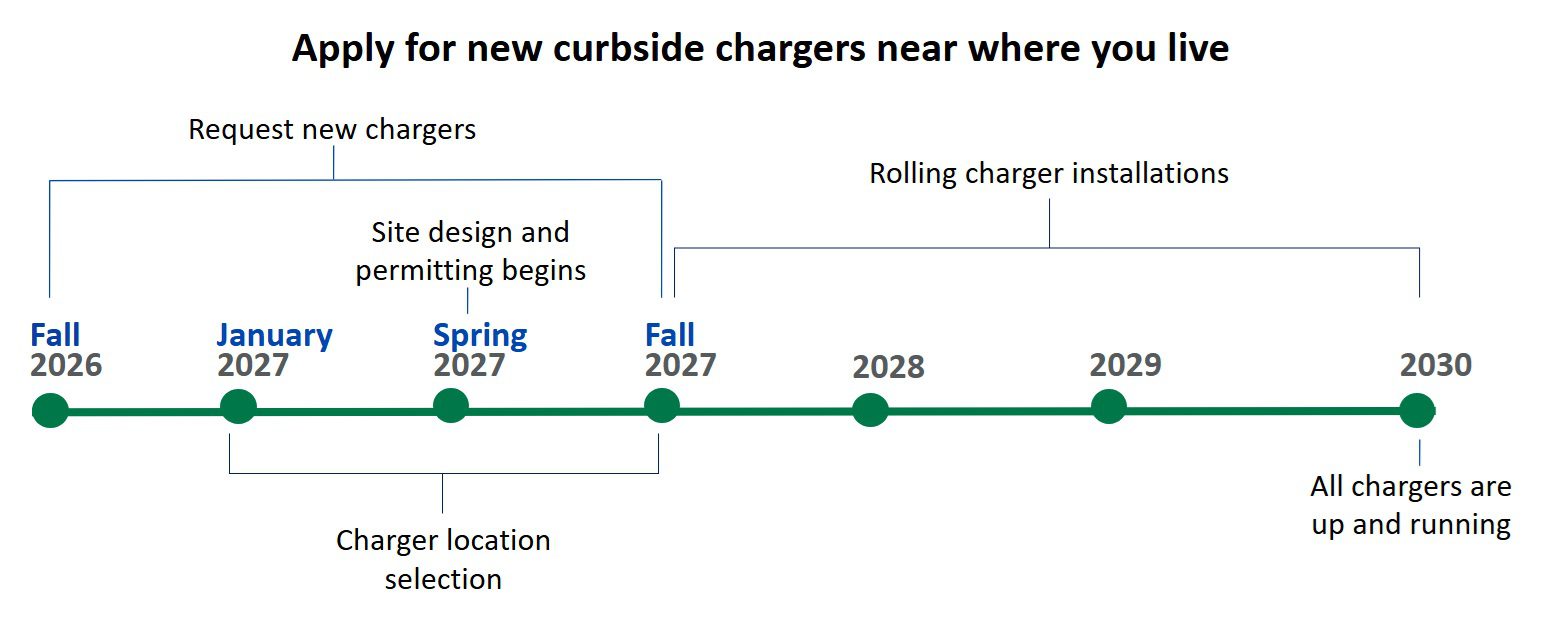
Learn more and apply for a charger here. Thanks for your interest.
Legal Disclaimer:
EIN Presswire provides this news content "as is" without warranty of any kind. We do not accept any responsibility or liability for the accuracy, content, images, videos, licenses, completeness, legality, or reliability of the information contained in this article. If you have any complaints or copyright issues related to this article, kindly contact the author above.
